Physical Address
304 North Cardinal St.
Dorchester Center, MA 02124
Physical Address
304 North Cardinal St.
Dorchester Center, MA 02124

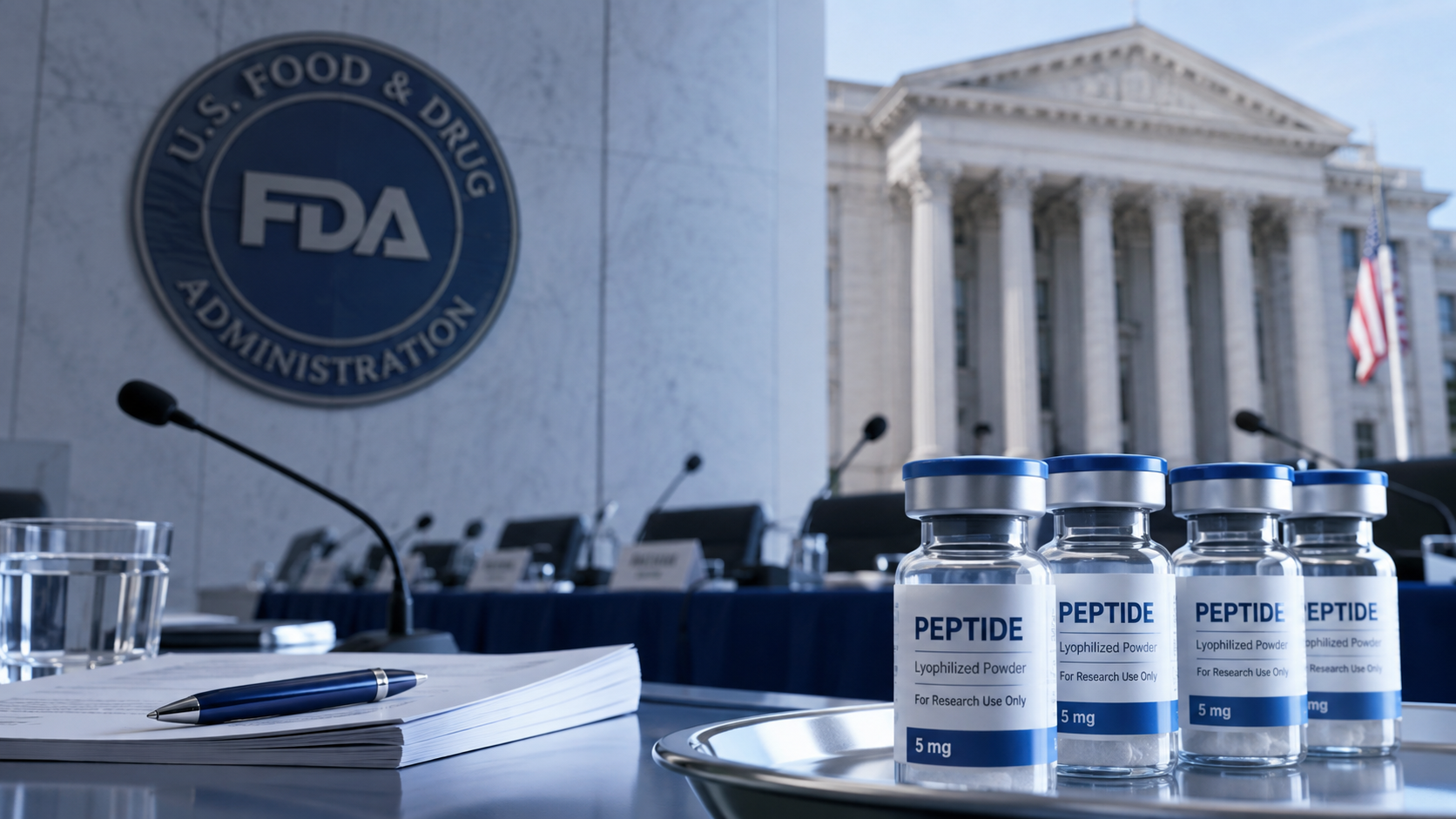
An FDA advisory panel voted narrowly in favor of easing restrictions on several peptides used in compounding, including BPC-157, TB-500 and KPV. The recommendations are not binding, and FDA scientists continue to raise safety and evidence concerns.
A federal advisory panel to the U.S. Food and Drug Administration narrowly recommended easing restrictions on several peptides that have become popular across wellness, longevity and performance communities.
The panel voted 8-6, with one abstention, in favor of allowing several peptides — including BPC-157, TB-500 and KPV — to move toward a regulatory status that could make pharmacy compounding easier.
The recommendation is not binding, and the FDA is not required to follow the panel’s advice.
If the FDA ultimately adopts the recommendation, it could significantly affect the U.S. peptide and compounding market.
Compounding pharmacies and telehealth companies could potentially gain a clearer pathway to offer certain peptide preparations, while patients may see greater access through licensed medical channels.
However, a formal regulatory change could still take months or longer.
FDA staff scientists raised substantial concerns about the evidence supporting the peptides.
According to the agency’s review, available studies involving BPC-157 were generally small, short and exploratory. Regulators also said they could not identify human studies supporting TB-500 for proposed medical uses.
FDA staff have questioned both the safety and effectiveness of several peptides currently promoted for uses such as injury recovery, muscle growth, skin rejuvenation and energy.
Supporters of broader access argue that allowing licensed pharmacies to compound peptides could move consumers away from unverified products sold through less-regulated online channels.
Critics argue that the clinical evidence remains too limited to establish safety, effectiveness or consistent product quality.
The disagreement highlights a larger issue facing the peptide industry: consumer demand is growing much faster than the clinical and regulatory framework surrounding many of these substances.
The advisory panel’s recommendation is only one step in the FDA process.
The agency will continue reviewing the panel’s votes, scientific evidence and public comments before deciding whether to change its approach to the peptides under consideration.
Additional peptide votes were also scheduled as part of the two-day advisory meeting.
Source: PBS NewsHour / Associated Press, reporting by Matthew Perrone, published July 23, 2026.